
Feeling tired, bloated, or mentally sluggish lately?
Many people immediately search for a “liver cleanse” hoping for a quick reset. And with so many detox drinks and cleansing programs online, it’s easy to believe your liver needs dramatic intervention.
But here’s the reality:
Your liver already works around the clock to process nutrients, filter waste, support digestion, and maintain balance throughout the body.
The real goal is not forcing detoxification. It’s supporting your liver naturally through healthier daily habits.
That’s where a balanced, evidence-informed approach to liver health can make a meaningful difference.
What Is a Natural Liver Cleanse?
A natural liver cleanse is a lifestyle approach that supports healthy liver function through balanced nutrition, hydration, exercise, quality sleep, and reduced exposure to harmful substances. Rather than “flushing toxins,” the goal is to support the liver’s natural detoxification processes and reduce unnecessary stress on the body.
What Is Liver Cleansing?
Liver cleansing refers to lifestyle habits and dietary changes that support healthy liver function naturally. This may include eating nutrient-rich foods, staying hydrated, reducing alcohol intake, improving sleep, and limiting processed foods. The liver already detoxifies the body naturally, but healthy habits may help support its function.
Why the Liver Is So Important for Overall Health
The liver is one of the most hardworking organs in the human body.
It performs more than 500 essential functions, including:
- Supporting digestion
- Processing nutrients
- Producing bile
- Regulating metabolism
- Storing vitamins and minerals
- Helping process medications and waste products
In many ways, the liver acts like the body’s internal processing center.
And because it works continuously, modern lifestyle habits can gradually place extra pressure on it.
What Can Affect Liver Health?
Here’s where things get interesting.
Most people associate liver problems only with alcohol, but everyday habits can also influence liver function over time.
Common factors include:
- Highly processed foods
- Excess sugar intake
- Poor sleep quality
- Lack of physical activity
- Chronic stress
- Smoking
- Environmental pollutants
- Long-term medication use
Even ongoing stress may affect the body’s metabolic balance and digestion.
That’s why supporting liver health often involves improving overall lifestyle patterns, not relying on quick detox solutions.
Does Liver Cleansing Really Work?
This is one of the most searched questions online.
The truth is more nuanced than many detox advertisements suggest.
Current research indicates that the liver naturally detoxifies the body without the need for extreme cleanses or restrictive detox programs. However, healthy lifestyle habits may help support normal liver function and overall metabolic health.
In other words:
- Your liver already detoxifies naturally
- Healthy habits help it function more efficiently
That distinction matters.
Signs Your Body May Need More Liver Support
The body does not usually send dramatic warning signs immediately. Often, symptoms develop gradually.
Some people notice:
- Low energy levels
- Sluggish digestion
- Bloating
- Brain fog
- Poor concentration
- Feeling heavy after meals
- Changes in appetite
- Difficulty maintaining healthy habits
Of course, these symptoms can have many causes. Persistent symptoms should always be discussed with a qualified healthcare professional.
Still, improving lifestyle habits may support both liver health and overall wellness.
Best Foods for Liver Health
Nutrition is one of the most effective ways to support the liver naturally.
The good news is that you don’t need complicated detox plans. In reality, simple whole foods often work best.
Here are some foods commonly associated with liver-supportive nutrition.
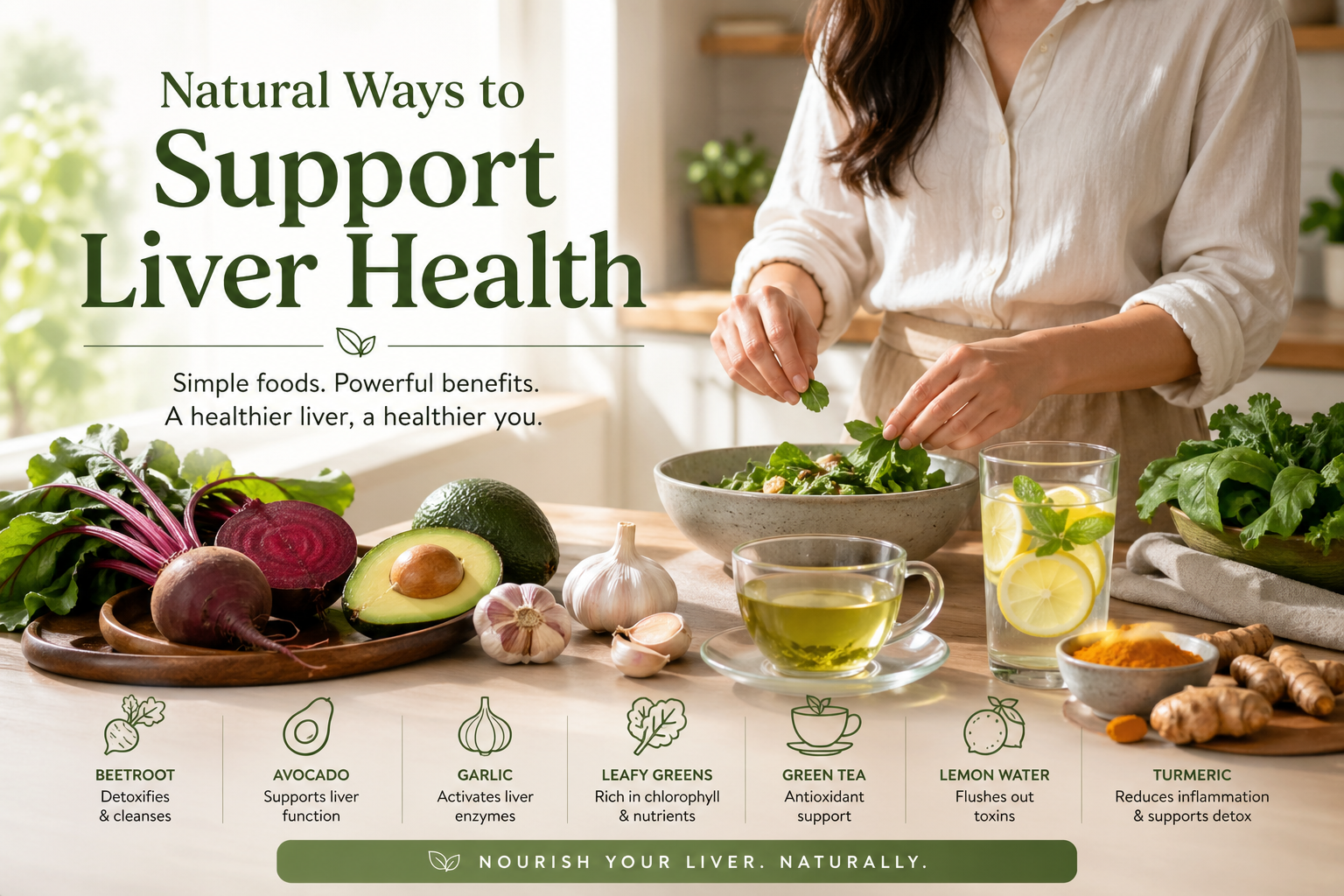
Garlic
Garlic contains sulfur compounds that help support natural enzyme activity involved in metabolic processes.
It also contains selenium, an important trace mineral.
Leafy Greens
Spinach, kale, arugula, and other leafy greens provide antioxidants and plant compounds that support overall wellness.
These foods are also rich in chlorophyll and fiber.
Cruciferous Vegetables
Broccoli, cauliflower, cabbage, and Brussels sprouts contain plant compounds that may support the body’s natural detoxification pathways.
They are also excellent sources of fiber and nutrients.
Beetroot
Beets contain antioxidants and nutrients like folate and betalains that may support circulation and metabolic health.
Many people include beetroot in smoothies, salads, or roasted vegetable dishes.
Avocado
Avocados provide healthy fats and important nutrients that support overall cellular health.
They also help increase satiety and support balanced eating habits.
Walnuts
Walnuts contain omega-3 fatty acids and antioxidants that may support heart and metabolic health.
A small handful makes a great nutrient-dense snack.
Green Tea
Green tea contains catechins, natural antioxidants that have been studied for their potential role in supporting metabolic wellness.
At the same time, moderation matters with all beverages containing caffeine.
Spices That May Support Liver Function
Sometimes small daily additions can make a surprisingly positive difference.
Turmeric
Known for its antioxidant and anti-inflammatory properties.
Black Pepper
Often paired with turmeric because it may improve absorption.
Cinnamon
May help support balanced blood sugar levels when combined with a healthy diet.
Adding these spices to soups, teas, or meals is an easy way to include them naturally.
Healthy Habits That Support Liver Function
Food matters, but lifestyle matters just as much.
And this is something many people overlook.
Stay Hydrated
Water supports many important metabolic and digestive processes throughout the body.
Aim for consistent hydration throughout the day rather than excessive “detox water” routines.
Prioritize Sleep
Poor sleep may affect:
- Hormonal balance
- Stress levels
- Appetite regulation
- Energy production
Over time, consistent sleep deprivation can affect overall metabolic health.
Manage Stress Levels
Chronic stress may influence digestion, appetite, and lifestyle patterns.
Helpful stress-management habits include:
- Walking outdoors
- Deep breathing exercises
- Meditation
- Limiting screen time
- Taking regular breaks
Small daily habits often have the biggest long-term impact.
Move Your Body Regularly
Regular movement supports:
- Circulation
- Digestion
- Metabolic health
- Energy levels
This doesn’t always require intense exercise.
Walking, stretching, cycling, yoga, or strength training can all contribute to overall wellness.
A Simple 3-Step Natural Liver Support Plan
Instead of following extreme detox trends, focus on consistency.
Here’s a more balanced approach.
Step 1: Improve Gut Health
The gut and liver are closely connected.
Focus on:
- Fiber-rich foods
- Probiotics
- Whole foods
- Reducing highly processed meals
This creates a stronger foundation for digestive wellness.
Step 2: Reduce Everyday Overload
Gradually reduce:
- Excess sugar
- Alcohol
- Fried foods
- Ultra-processed snacks
At the same time, increase nutrient-dense foods.
Step 3: Build Sustainable Habits
Consistency matters more than perfection.
Simple habits such as:
- Better sleep
- Daily walks
- Balanced meals
- Stress management
may support long-term wellness far more effectively than short-term detoxes.
Common Liver Cleanse Myths
There’s a lot of misinformation online about liver detoxification.
Let’s clear up a few common myths.
Myth #1: Detox Drinks “Flush Out” Toxins
Your liver and kidneys already process waste naturally.
No drink can instantly “clean” the liver overnight.
Myth #2: Extreme Fasting Is Necessary
Very restrictive diets may sometimes place additional stress on the body.
Balanced nutrition is usually the safer and more sustainable option.
Myth #3: Supplements Alone Fix Liver Health
Supplements may support wellness in some cases, but they cannot replace healthy habits.
Lifestyle still matters most.
What Research Says About Liver Cleansing
Current scientific evidence does not strongly support extreme detox cleanses or aggressive liver “flushes.”
However, research consistently supports healthy lifestyle practices such as:
- Balanced nutrition
- Maintaining a healthy weight
- Regular exercise
- Limiting alcohol
- Managing stress
- Eating antioxidant-rich foods
These habits are widely associated with better liver and metabolic health.
Frequently Asked Questions
How can I support liver health naturally?
Focus on whole foods, hydration, quality sleep, regular exercise, stress management, and reducing processed foods and alcohol intake.
What are the best foods for liver health?
Leafy greens, garlic, beetroot, avocado, walnuts, cruciferous vegetables, and green tea are commonly associated with liver-supportive nutrition.
Does liver cleansing help with weight loss?
Healthy lifestyle changes may support metabolism and overall wellness, but no liver cleanse guarantees weight loss.
How long should a liver cleanse last?
Rather than following extreme short-term detoxes, long-term healthy habits are generally considered more beneficial.
Are detox teas safe?
Some herbal teas may support hydration and digestion, but excessive detox tea use may not be appropriate for everyone.
Final Thoughts
The idea of “cleansing” the liver can sound appealing, especially when you’re feeling run down or out of balance.
But lasting wellness rarely comes from extreme solutions.
In reality, supporting your liver naturally usually means returning to the basics:
- Eating nutrient-rich foods
- Sleeping well
- Managing stress
- Staying active
- Building sustainable routines
Your liver is already doing the hard work every day.
The best thing you can do is support it consistently.
Medical Disclaimer
This article is for informational and educational purposes only and does not constitute medical advice, diagnosis, or treatment. Always consult a qualified healthcare professional before making changes to your diet, supplements, medications, or lifestyle, especially if you have existing medical conditions.
Sources
- Harvard Health Publishing
- Mayo Clinic
- Cleveland Clinic
- National Institute of Diabetes and Digestive and Kidney Diseases (NIDDK)
- American Liver Foundation
- World Health Organization (WHO)