

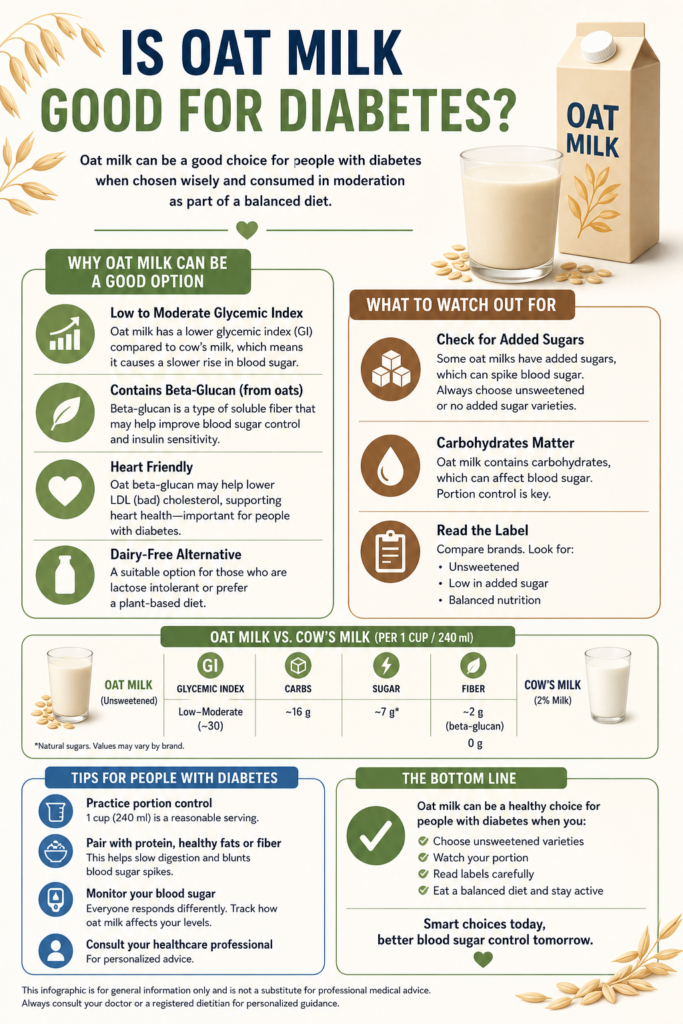
Oat milk can be a suitable option for some people with diabetes when consumed in moderation and chosen carefully. Unsweetened oat milk with minimal added ingredients may have a gentler effect on blood sugar compared to sugary beverages, but some varieties can still raise glucose levels due to their carbohydrate content.
As plant-based milk alternatives continue to grow in popularity, many people are wondering whether oat milk is actually healthy, especially for blood sugar management.
It’s creamy, naturally dairy-free, and commonly used in coffee, smoothies, cereal, and baking. But if you are managing diabetes, insulin resistance, or blood sugar fluctuations, understanding how oat milk affects the body is important before making it part of your daily routine.
This guide explores the nutritional profile of oat milk, its potential benefits, possible drawbacks, and whether it fits into a diabetes-friendly diet.
What Is Oat Milk?
Oat milk is a plant-based beverage made by blending oats with water and straining the mixture into a smooth liquid.
Unlike cow’s milk, oat milk is naturally:
- Dairy-free
- Lactose-free
- Cholesterol-free
- Vegan-friendly
Its mild taste and creamy texture have made it one of the most popular milk alternatives in recent years.
Many commercial versions are also fortified with nutrients such as:
- Calcium
- Vitamin D
- Vitamin B12
However, nutritional content can vary significantly between brands and formulations.
Is Oat Milk Good for People With Diabetes?
The answer depends largely on:
- The type of oat milk
- Added sugar content
- Portion size
- Individual blood sugar response
Here’s the key issue:
Oats naturally contain carbohydrates, which means oat milk may raise blood sugar levels more than some other unsweetened plant-based milks.
However, oat milk also contains soluble fiber, including beta-glucans, which may help slow digestion and support more stable blood sugar levels.
For many people, moderate consumption of unsweetened oat milk can fit into a balanced diabetes-friendly eating plan.
How Oat Milk Affects Blood Sugar Levels
One reason oat milk receives attention in diabetes discussions is its glycemic impact.
The glycemic index (GI) measures how quickly carbohydrate-containing foods raise blood sugar.
Because oats contain carbohydrates that are broken down into glucose, oat milk generally has a moderate glycemic index. Sweetened varieties may have an even greater effect on blood sugar.
Blood Sugar Impact May Increase If:
- The product contains added sugars
- Portion sizes are large
- It is consumed alone without protein or healthy fats
- Highly processed ingredients are included
Blood Sugar Impact May Be Lower If:
- You choose unsweetened oat milk
- It contains fiber-rich ingredients
- It is paired with balanced meals
- Portion sizes are moderate
Everyone responds differently to carbohydrates, so monitoring personal glucose responses may be helpful.
Nutritional Benefits of Oat Milk
Despite concerns about carbohydrates, oat milk may offer several nutritional advantages when chosen carefully.
1. Naturally Dairy-Free
For people with lactose intolerance or dairy sensitivity, oat milk provides a convenient alternative without lactose or milk proteins.
This makes it easier for some individuals to enjoy:
- Coffee
- Smoothies
- Cereal
- Baking recipes
without digestive discomfort associated with dairy products.
2. Contains Soluble Fiber
Oats naturally contain beta-glucans, a type of soluble fiber linked to heart health and cholesterol support.
Fiber may help:
- Promote fullness
- Support digestion
- Slow glucose absorption
- Support healthy cholesterol levels
This is one reason oats are often included in heart-conscious eating plans.
3. May Support Heart Health
Some research suggests that oat-based foods containing beta-glucans may help reduce LDL (“bad”) cholesterol levels when consumed regularly as part of a balanced diet.
Heart health is especially important for people with diabetes because cardiovascular disease risk is often higher in individuals with long-term blood sugar imbalance.
4. Often Fortified With Nutrients
Many oat milk products contain added:
- Calcium
- Vitamin D
- Vitamin B12
These nutrients support:
- Bone health
- Nerve function
- Immune support
Still, not all products are fortified equally, which is why reading nutrition labels matters.
Can Oat Milk Cause Blood Sugar Spikes?
Yes, it can particularly if the product contains added sugar.
Some flavored or sweetened oat milk varieties include:
- Cane sugar
- Syrups
- Artificial flavorings
- Sweeteners
These ingredients may significantly increase carbohydrate intake and potentially raise blood sugar levels more rapidly.
Better Option for Diabetes
Look for:
- Unsweetened oat milk
- Minimal ingredient lists
- Higher fiber content
- No added sugars
Simple label reading can make a major difference.
Is Oat Milk Better Than Cow’s Milk for Diabetes?
There is no single “best” milk choice for everyone with diabetes.
Cow’s milk naturally contains lactose, a milk sugar that also affects blood glucose. Oat milk may contain more carbohydrates depending on processing and ingredients.
General Comparison
| Feature | Oat Milk | Cow’s Milk |
|---|---|---|
| Lactose-Free | Yes | No |
| Cholesterol-Free | Yes | No |
| Fiber Content | Usually contains some fiber | No fiber |
| Protein | Usually lower | Higher |
| Blood Sugar Impact | Moderate | Moderate |
The healthier choice often depends on individual nutrition goals, preferences, and blood sugar response.
Can Oat Milk Help Lower Cholesterol?
Research on oats suggests that beta-glucans may support healthy cholesterol levels.
Some studies have linked regular oat consumption with:
- Lower LDL cholesterol
- Improved heart health markers
- Better digestive health
However, oat milk should not be viewed as a medical treatment or replacement for professional care.
Overall dietary patterns matter far more than one single food.
Can Oat Milk Cause Bloating?
For some people, yes.
Because oats contain fiber, increasing intake too quickly may lead to:
- Bloating
- Gas
- Digestive discomfort
This is more common in individuals who are not used to fiber-rich foods.
Starting with smaller portions and staying hydrated may help reduce digestive issues.
Tips for Choosing the Best Oat Milk
Not all oat milk products are created equally.
What to Look For
- Unsweetened varieties
- Short ingredient lists
- No added sugars
- Fortified calcium and vitamin D
- Minimal additives
What to Limit
- Sweetened flavors
- Artificial syrups
- Excess stabilizers
- Highly processed versions
Reading labels carefully is one of the smartest ways to make healthier choices.
Simple Ways to Use Oat Milk in a Balanced Diet
Oat milk can work well in moderation as part of balanced meals.
Popular Uses
- Coffee and tea
- Overnight oats
- Smoothies
- Soups
- Whole-grain cereal
- Baking recipes
Pairing oat milk with:
- Protein
- Fiber
- Healthy fats
may help create more stable energy and blood sugar balance.
Frequently Asked Questions
Is oat milk safe for people with diabetes?
Unsweetened oat milk may be suitable for some people with diabetes when consumed in moderation as part of a balanced diet.
Does oat milk raise blood sugar?
Oat milk can raise blood sugar because it contains carbohydrates. Sweetened varieties may have a stronger effect.
What is the best oat milk for diabetes?
Unsweetened oat milk with minimal added ingredients and no added sugar is generally considered a better option.
Is oat milk healthier than almond milk?
Both have advantages. Oat milk usually contains more carbohydrates and fiber, while unsweetened almond milk is often lower in carbs.
Can oat milk help lower cholesterol?
Oats contain beta-glucans, a type of soluble fiber associated with heart health and cholesterol support.
Final Thoughts
Oat milk can be part of a healthy diet for some people with diabetes, but choosing the right type matters.
Unsweetened versions with simple ingredients are generally better choices than heavily sweetened or highly processed varieties.
While oat milk offers benefits such as:
- Fiber
- Dairy-free nutrition
- Heart-health support
- Added vitamins and minerals
it is still important to monitor carbohydrate intake and overall dietary balance.
As with most nutrition decisions, moderation, label awareness, and personal health needs should guide your choices.
Medical Disclaimer
The information provided in this article is intended for general educational and informational purposes only. It should not be considered medical advice or used as a substitute for professional diagnosis, treatment, or healthcare guidance. Always seek advice from a licensed physician, healthcare provider, or registered dietitian before making changes to your diet, lifestyle, or diabetes management plan.
Sources
- American Diabetes Association
- Harvard T.H. Chan School of Public Health
- Mayo Clinic
- Cleveland Clinic
- National Institutes of Health (NIH)
- World Health Organization (WHO)