Meal replacement shakes are often marketed as a quick fix for weight loss and nutrition, but do they actually work?
In short: they can help in specific situations, but they are not a long-term solution for weight loss or overall health, and relying on them regularly may come with downsides.
Let’s break this down in a practical, no-hype way.
What Are Meal Replacement Shakes?
Meal replacement shakes are powdered or ready-to-drink products designed to replace a full meal. They typically contain:
- Protein (whey or plant-based)
- Added vitamins and minerals
- Carbohydrates and fats
- Sweeteners and flavoring agents
They’re usually calorie-controlled, which is why they’re often promoted for weight loss.
You’ll see them used by:
- Busy professionals skipping meals
- People trying to lose weight quickly
- Travelers with limited food options
- Older adults with reduced appetite
On paper, they sound convenient. In real life, the picture is more complex.
Do Meal Replacement Shakes Help With Weight Loss?
Meal replacement shakes may support short-term weight loss by reducing calorie intake—but they do not address long-term eating habits.
Here’s what typically happens:
- You replace meals – calorie intake drops
- Weight may decrease initially
- Normal eating resumes – weight often returns
This is why many people experience the “yo-yo effect.”
The Key Issue
Weight loss isn’t just about calories, it’s about:
- Hormonal balance
- Hunger signals
- Food habits
- Sustainability
Liquid meals don’t train your body or mind to manage real food.
Why Meal Replacement Shakes Feel Convenient (But Come With Trade-Offs)
Let’s be fair, these shakes do have some benefits.
When They Can Be Useful
- During travel with limited food options
- For short-term calorie control
- In medical or supervised nutrition plans
- For people with difficulty chewing or swallowing
But convenience doesn’t always equal quality nutrition.
The Hidden Risks of Meal Replacement Shakes
1. High Sweetener Content May Affect Metabolism
Many shakes contain artificial or plant-based sweeteners, often much sweeter than sugar.
When your body tastes sweetness, it may release insulin in anticipation of sugar. Over time, this mismatch can:
- Increase cravings
- Disrupt hunger signals
- Affect blood sugar balance
Health authorities, including the World Health Organization, have raised concerns about the long-term use of sweeteners for weight management.
2. Lack of Essential Whole-Food Nutrients
Even if shakes include vitamins and minerals, they often miss key compounds found in real food, such as:
- Fiber diversity
- Phytonutrients
- Antioxidants
- Plant compounds (flavonoids, carotenoids)
These play a major role in:
- Gut health
- Immunity
- Inflammation control
A powder simply can’t fully replicate a plate of fresh food.
3. Low Fiber Intake
Fiber is essential for digestion, satiety, and metabolic health.
Many meal replacement shakes contain:
- Very little fiber
- Or a limited type of added fiber
Compare that to real food:
- Fruits
- Vegetables
- Whole grains
These provide both soluble and insoluble fiber, which support gut health and fullness.
4. No Chewing = Less Satisfaction
This might sound minor, but it matters.
Chewing:
- Signals fullness to your brain
- Triggers digestive enzymes
- Supports healthy digestion
Liquid meals bypass this process, which may lead to:
- Feeling less satisfied
- Eating more later
- Increased calorie intake overall
5. Highly Processed Nature
Most meal replacement shakes fall into the category of ultra-processed foods (UPFs).
They often contain:
- Artificial flavorings
- Stabilizers
- Preservatives
- Additives for shelf life
While convenient, highly processed foods are generally less beneficial than whole, minimally processed options.
6. May Lead to Increased Hunger
Liquid calories move through the stomach faster than solid food.
This can result in:
- Earlier hunger signals
- Snacking between meals
- Difficulty maintaining calorie control
Ironically, something meant for weight loss may lead to higher overall calorie intake.
7. Excess Protein Intake
Protein is important, but more isn’t always better.
Some shakes contain high protein levels, which may:
- Put strain on kidneys (in certain individuals)
- Displace other important nutrients
- Create imbalance in diet
Balance is key.
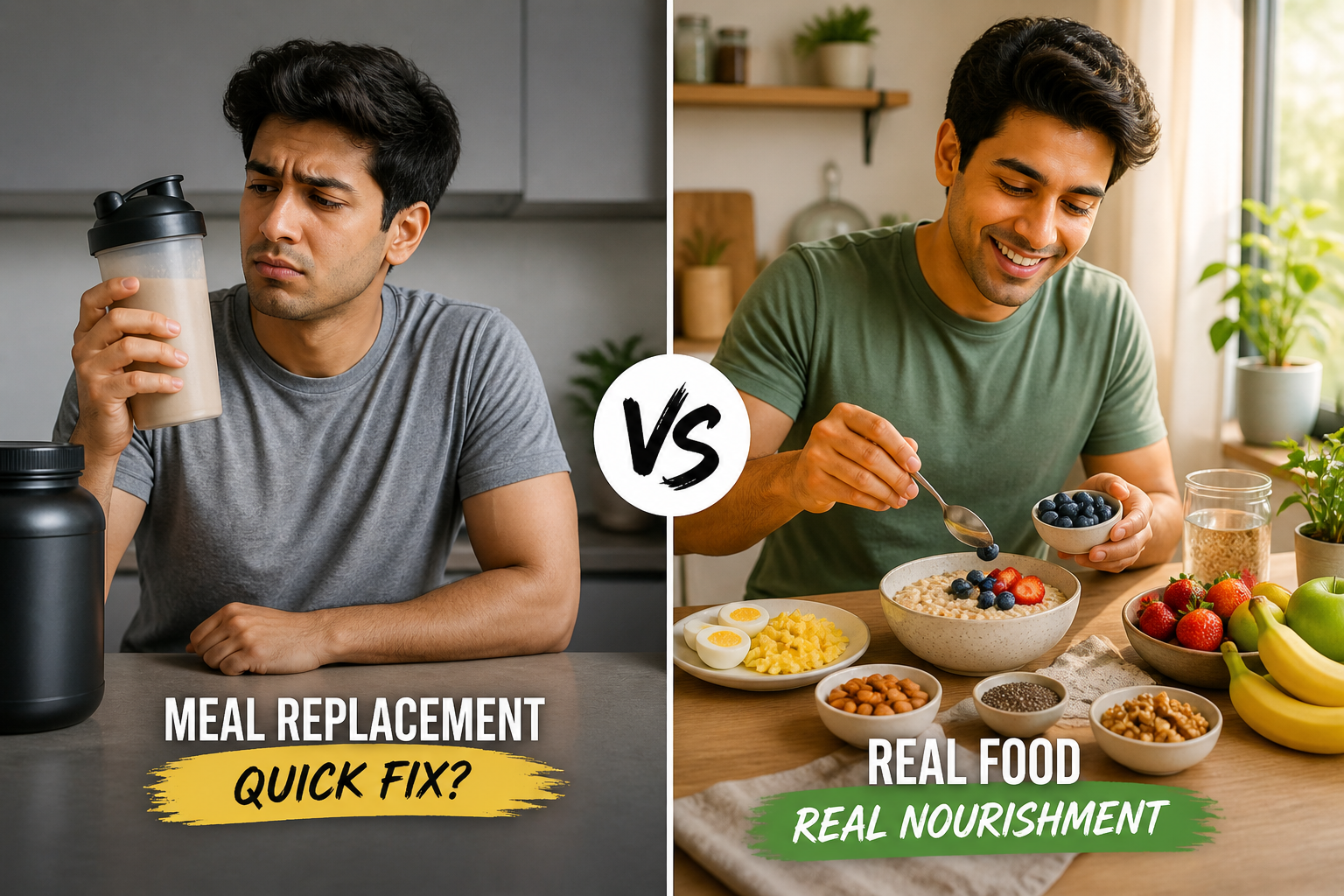
Meal Replacement Shakes vs Real Food
Let’s simplify it.
Real Food Provides:
- Natural fiber
- Diverse nutrients
- Better satiety
- Improved digestion
- Long-term sustainability
Meal Replacement Shakes Provide:
- Convenience
- Controlled calories
- Limited nutrient variety
- Short-term results
When it comes to long-term health and weight management, real food wins.
Are Meal Replacement Shakes Good for Long-Term Use?
No, meal replacement shakes are not ideal for long-term daily use.
They don’t teach:
- Healthy eating habits
- Portion awareness
- Balanced nutrition
And once you stop using them, results often reverse.
Sustainable weight loss comes from:
- Consistent eating patterns
- Whole foods
- Lifestyle changes
A Better Approach to Healthy Weight Loss
Instead of relying on shakes, focus on:
1. Balanced Meals
Include:
- Protein
- Fiber
- Healthy fats
- Whole carbohydrates
2. Regular Eating Patterns
Avoid skipping meals or relying on liquid calories.
3. Whole Foods First
Base your diet on:
- Vegetables
- Fruits
- Whole grains
- Lean proteins
4. Lifestyle Consistency
Weight loss improves when habits are realistic and sustainable.
Common Mistakes to Avoid
- Replacing all meals with shakes
- Ignoring ingredient labels
- Relying on quick fixes
- Skipping whole foods
- Expecting long-term results from short-term strategies
Frequently Asked Questions
Are meal replacement shakes effective for weight loss?
They may help in the short term by reducing calorie intake, but they are not a sustainable long-term solution.
Can I replace all meals with shakes?
No. Doing so may lead to nutrient gaps, reduced satiety, and poor long-term health outcomes.
Are meal replacement shakes healthy?
They can be useful occasionally, but whole foods provide more complete nutrition and health benefits.
Do meal replacement shakes slow metabolism?
Not directly, but long-term calorie restriction and poor nutrition balance may affect metabolism over time.
What is better than meal replacement shakes?
Balanced, whole-food meals are generally more effective for long-term health and weight management.
Final Thoughts
Meal replacement shakes are not inherently “bad,” but they are often overused and misunderstood.
They may offer convenience, but they don’t replace:
- Real nutrition
- Healthy habits
- Sustainable lifestyle changes
If your goal is long-term health or weight loss, the most effective strategy is still simple:
Eat real food, build consistent habits, and focus on balance rather than shortcuts.
Medical Disclaimer
This content is provided for general educational purposes only and should not be considered medical advice, diagnosis, or treatment. For personalized guidance, always consult a qualified healthcare professional before making any changes to your diet or health routine, particularly if you have existing medical conditions.