
Most people already understand the basics of healthy eating. We know vegetables are important, processed foods should be limited, and balanced meals support overall health. Yet despite this knowledge, maintaining healthy eating habits in everyday life often feels much harder than expected.
Busy schedules, work pressure, family responsibilities, and mental fatigue can quickly push healthy intentions aside. After a long and stressful day, convenience usually wins over careful meal preparation.
The good news is that healthy eating does not need to be perfect or complicated. In many cases, success comes from creating practical systems that fit naturally into daily life.
This guide explains why healthy eating habits often fail and shares realistic strategies that can make healthy choices easier to maintain long term.
Why Healthy Eating Becomes Difficult in Daily Life
Many people assume healthy eating fails because of a lack of motivation or willpower. In reality, the problem is often a lack of structure.
When daily life becomes stressful, decision-making energy decreases. This is sometimes called “decision fatigue.” After handling work, errands, family responsibilities, and constant distractions, preparing a balanced meal may feel overwhelming.
As a result, people often choose:
- Fast food
- Highly processed snacks
- Sugary drinks
- Convenience meals
- Late-night eating
These choices are understandable. Most people are simply trying to save time and energy.
Healthy eating becomes easier when systems and routines reduce the need for constant decision-making.
Structure Matters More Than Strict Discipline
Many diets fail because they rely heavily on restriction and perfection.
Strict meal plans, food rules, and unrealistic expectations may work temporarily, but they are often difficult to maintain in real life. Over time, this can lead to frustration, stress, and unhealthy eating cycles.
A more sustainable approach focuses on structure rather than extreme discipline.
Healthy eating routines should:
- Fit your lifestyle
- Reduce stress
- Be flexible
- Support consistency
- Feel realistic long term
The goal is not perfect eating. The goal is creating habits that are practical enough to continue even during stressful periods.
1. Plan Meals Roughly Instead of Perfectly
Meal planning does not need to be complicated.
Many people stop planning entirely because they believe every meal must be perfectly organized. In reality, a simple outline is often enough.
A Practical Approach
Ask yourself:
- What meals will I likely prepare this week?
- Which ingredients do I already have?
- What healthy options can I prepare quickly?
Even basic preparation can reduce impulsive food choices driven by stress or hunger.
Why It Helps
Simple meal planning may:
- Save time
- Reduce food waste
- Lower stress
- Improve consistency
- Support healthier decisions
Flexibility is important. A rough structure is usually easier to maintain than a rigid schedule.
2. Build a Healthy Foundation at Home
The foods available at home strongly influence eating habits.
If highly processed snacks and sugary foods are easily accessible, they are more likely to become default choices during busy moments.
Creating a healthier kitchen environment can make balanced eating more convenient.
Foods Worth Keeping Available
- Fresh or frozen vegetables
- Fruits
- Eggs
- Yogurt
- Whole grains
- Nuts and seeds
- Beans and lentils
- Lean protein sources
- Healthy fats like olive oil or avocado
When healthier ingredients are easy to access, preparing balanced meals requires less effort.
3. Create Simple “Go-To” Meals
One common mistake is believing healthy meals must always be creative or time-consuming.
In reality, simple meals are often the most sustainable.
Choose a few meals that are:
- Quick to prepare
- Nutritious
- Filling
- Affordable
- Easy to repeat
Examples of Easy Balanced Meals
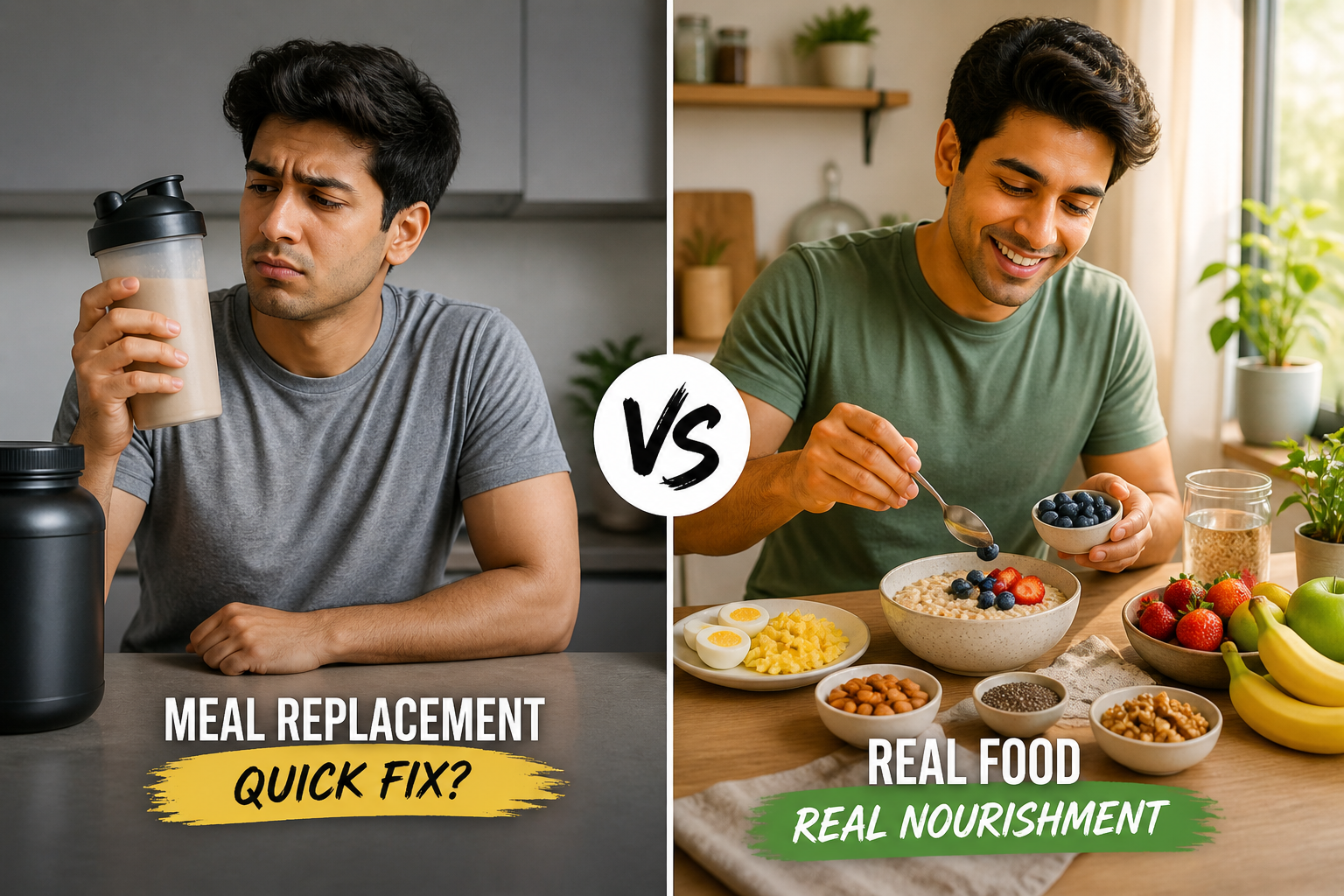
- Oatmeal with fruit and nuts
- Grilled chicken with vegetables and rice
- Greek yogurt with berries
- Whole-grain wraps with lean protein
- Vegetable omelets
- Lentil or bean bowls
Having reliable meal options reduces stress and helps avoid unhealthy convenience foods.
4. Focus on Balanced Combinations Instead of Food Restrictions
Healthy eating does not require eliminating every favorite food.
Overly restrictive diets often increase cravings and make eating feel stressful.
A more practical strategy is focusing on balanced food combinations.
A Balanced Meal Often Includes
- Protein
- Healthy fats
- Fiber-rich foods
- Complex carbohydrates
These combinations may help:
- Improve fullness
- Stabilize energy levels
- Reduce cravings
- Support blood sugar balance
Instead of asking:
“What foods must I avoid?”
Try asking:
“How can I make this meal more balanced?”
This mindset is often easier to maintain long term.
5. Use Small Daily Routines as Anchors
Healthy habits become easier when they are attached to existing routines.
Small routines may seem simple, but they can create long-term consistency.
Helpful Examples
- Eating breakfast at the same time daily
- Preparing snacks in advance
- Drinking water after waking
- Planning groceries on weekends
- Cooking simple dinners at home
These routines reduce the need for constant motivation.
Consistency usually matters more than intensity.
Healthy Eating Should Fit Your Lifestyle
One of the biggest reasons diets fail is that they do not match real life.
A healthy routine should still work during:
- Busy workdays
- Family responsibilities
- Stressful periods
- Travel
- Low-energy days
Perfection is not necessary.
Long-term success often comes from small improvements repeated consistently over time.
Common Mistakes That Make Healthy Eating Harder
Many people unintentionally create obstacles that make balanced eating more difficult.
Common Challenges
- Skipping meals
- Keeping mostly processed foods at home
- Relying on motivation alone
- Following overly strict diets
- Expecting perfect consistency
- Ignoring meal preparation entirely
Building realistic systems is usually more effective than relying on willpower alone.
What Research Says About Healthy Habits
Research from organizations such as:
- The World Health Organization (WHO)
- Harvard T.H. Chan School of Public Health
- Centers for Disease Control and Prevention (CDC)
consistently supports the importance of:
- Balanced nutrition
- Meal consistency
- Whole foods
- Reduced processed food intake
- Sustainable lifestyle habits
Studies also suggest that long-term routines are generally more effective than short-term restrictive diets.
Frequently Asked Questions
Why do people struggle to eat healthy consistently?
Stress, lack of time, decision fatigue, and unrealistic expectations are common reasons healthy eating becomes difficult.
Is meal planning necessary for healthy eating?
Meal planning can help reduce stress and improve consistency, but it does not need to be overly detailed.
What are simple healthy meals for busy people?
Quick balanced meals such as oatmeal, yogurt bowls, wraps, salads, rice bowls, and vegetable omelets are often practical choices.
Do healthy eating habits need to be strict?
No. Flexible and sustainable routines are often easier to maintain long term than highly restrictive diets.
How can I avoid unhealthy eating during stressful days?
Helpful strategies include:
- Preparing meals in advance
- Keeping healthy snacks available
- Using simple meal routines
- Avoiding overly complicated diet plans
Final Thoughts
Healthy eating often fails not because people lack knowledge, but because modern life can make consistency difficult.
The solution is usually not stricter discipline. Instead, practical structure, flexible routines, and realistic habits tend to create more sustainable results.
Simple changes such as:
- Planning meals loosely
- Keeping balanced foods available
- Creating easy go-to meals
- Building small routines
can make healthy eating feel far more manageable in everyday life.
Long-term health habits work best when they support your lifestyle instead of fighting against it.
Medical Disclaimer
This article is for informational and educational purposes only and does not replace professional medical or nutritional advice. Always consult a qualified healthcare provider or registered dietitian before making significant dietary or lifestyle changes.
Sources
- World Health Organization (WHO)
- Harvard T.H. Chan School of Public Health
- Centers for Disease Control and Prevention (CDC)
- Mayo Clinic
- Academy of Nutrition and Dietetics