You switch to healthy meals.
More vegetables, less junk. Maybe smoothies, salads, and whole grains.
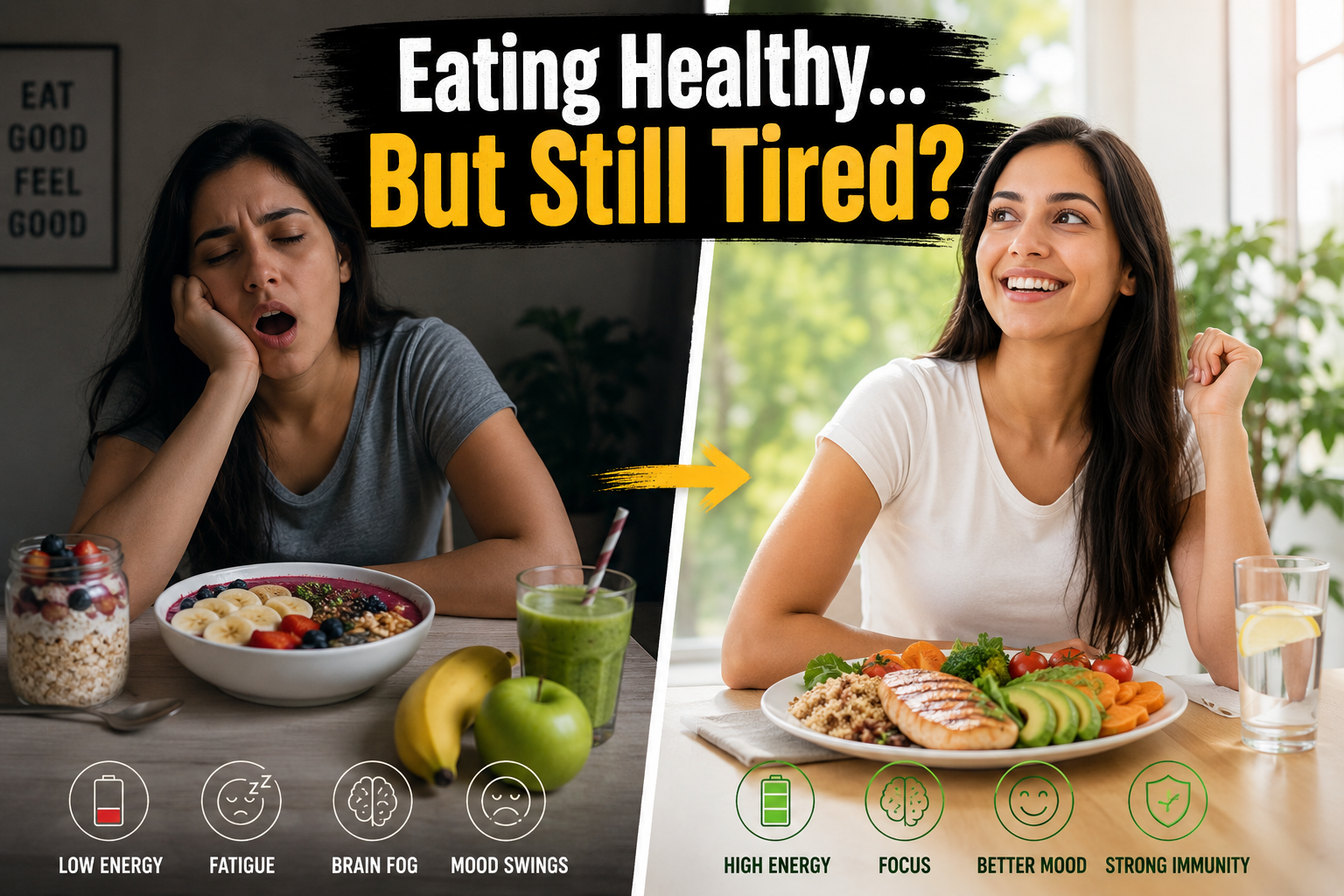
And yet… within an hour, you feel tired, sluggish, or even sleepy.
It feels confusing, right?
You’re doing everything “correct”, so why is your energy crashing?
The answer is more common than you think.
Why You Feel Tired After Eating Healthy Food?
You may feel tired after eating healthy food due to blood sugar fluctuations, digestive strain, food sensitivities, or imbalanced meals lacking protein and fats. Even healthy foods can cause energy crashes if they spike insulin levels or are not properly balanced.
The Hidden Reason Behind Post-Meal Fatigue
Let’s make this simple.
When you eat, your body:
- Breaks down food into energy
- Releases insulin
- Sends blood to the digestive system
If this process becomes unbalanced, it can lead to post-meal fatigue, even with “healthy” foods.
And this is where most people get misled.
Healthy food doesn’t always mean energy-stable food.
1. Blood Sugar Spikes (Even From Healthy Foods)
Foods like:
- Fruits
- Smoothies
- Oats
- Whole grains
are healthy—but they can still cause a rapid rise in blood sugar if eaten alone.
This leads to:
- Quick energy spike
- Sudden drop (crash)
- Feeling tired or sleepy
Real-Life Example
A fruit smoothie in the morning sounds perfect but without protein or fat, it may cause an energy crash within 1-2 hours.
2. You’re Missing Protein and Healthy Fats
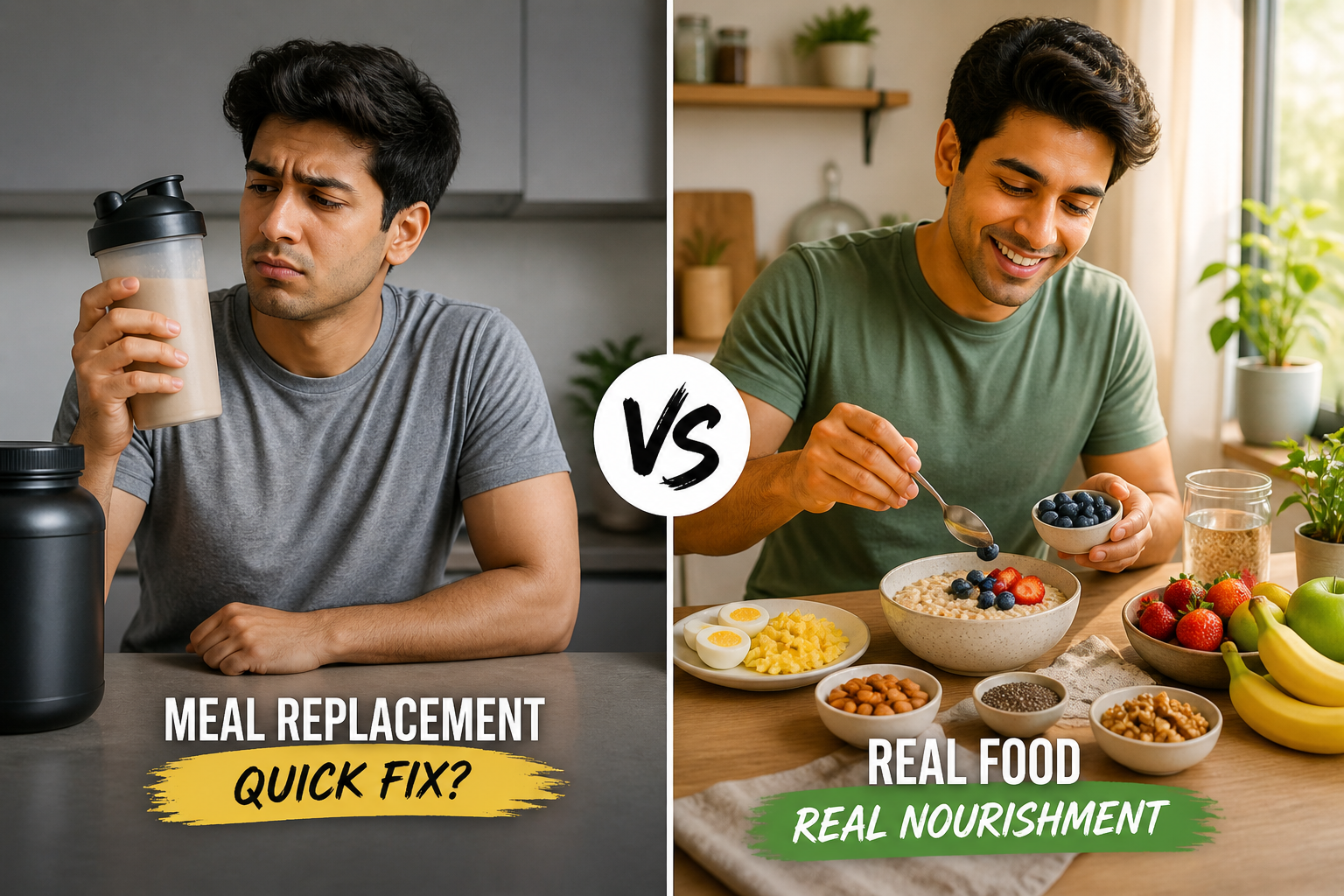
One of the biggest mistakes people make is eating carb-heavy “healthy meals.”
For example:
- Salad without protein
- Oats without nuts or seeds
- Fruit-only breakfast
These meals digest quickly and don’t provide sustained energy.
What Your Body Needs
To stay energized, meals should include:
- Protein (eggs, lentils, yogurt)
- Healthy fats (nuts, seeds, olive oil)
- Fiber (vegetables, whole foods)
Balanced meals = stable energy.
3. Digestive Overload
Sometimes the issue isn’t what you eat, it’s how your body handles it.
Large or fiber-heavy meals can:
- Slow digestion
- Increase blood flow to the gut
- Make you feel sluggish
This is especially common if:
- You eat too fast
- You overeat (even healthy food)
- Your digestion is sensitive
4. Food Sensitivities You Didn’t Notice
You might be eating foods that are “healthy” but not ideal for your body.
Common triggers include:
- Dairy
- Gluten
- Certain fruits
- Artificial sweeteners
Even mild sensitivities can lead to:
- Fatigue
- Brain fog
- Bloating
5. Poor Sleep + Healthy Food = Still Tired
Here’s something most people ignore:
Food cannot fix poor sleep.
If you:
- Slept late
- Had interrupted sleep
- Feel mentally exhausted
Even the healthiest meal won’t instantly boost energy.
Instead, your body may feel even more tired after eating.
6. Eating Too Little (Undereating)
Surprisingly, eating “too clean” can backfire.
If your meals are:
- Too low in calories
- Too restrictive
- Missing nutrients
Your body may lack enough fuel, leading to fatigue.
This is common in people trying to lose weight quickly.
7. Dehydration Plays a Bigger Role Than You Think
Even mild dehydration can cause:
- Low energy
- Brain fog
- Sluggish feeling after meals
Many people focus on food, but forget water.
Signs Your Meals Are Causing Energy Crashes
You might relate to this if:
- You feel sleepy after breakfast or lunch
- You need caffeine right after eating
- You feel heavy or slow post-meal
- Your energy drops within 1-2 hours
- You experience brain fog
How to Fix Post-Meal Fatigue (Simple & Practical)
Let’s keep this realistic and easy to follow.
1. Balance Every Meal
Instead of: Only carbs
Go for: Carbs + Protein + Fat
Example
- Oats + nuts + yogurt
- Rice + dal + vegetables
- Toast + eggs + avocado
2. Eat Slower
Fast eating = poor digestion
Try:
- Chewing properly
- Avoiding screens while eating
- Taking 15-20 minutes per meal
3. Don’t Overeat (Even Healthy Food)
Portion control still matters.
Large meals = more digestive load = more fatigue
4. Stay Hydrated
Start your day with water and continue throughout.
Even a small improvement here can boost energy.
5. Improve Sleep Quality
Focus on:
- Consistent sleep time
- Less screen exposure at night
- Relaxing bedtime routine
6. Track What Works for Your Body
Not every “healthy food” works the same for everyone.
Notice:
- Which meals give energy
- Which meals make you tired
Adjust accordingly.
What Research Suggests
Studies from organizations like:
- Harvard Health
- Mayo Clinic
- Cleveland Clinic
suggest that blood sugar balance, meal composition, and digestion play a major role in post-meal energy levels.
Balanced meals and stable glucose levels are key factors in avoiding fatigue.
Common Mistakes to Avoid
- Eating fruit alone as a meal
- Skipping protein
- Overeating “healthy” foods
- Ignoring hydration
- Relying only on caffeine
- Eating too quickly
- Following extreme diets
Frequently Asked Questions
Why do I feel sleepy after eating healthy food?
This may happen due to blood sugar spikes, digestion load, or lack of balanced nutrients like protein and fats.
Is it normal to feel tired after eating?
Mild relaxation is normal, but consistent fatigue may indicate imbalanced meals or lifestyle factors.
Which foods cause energy crashes?
High-carb meals without protein or fat, sugary foods, and large portions may lead to crashes.
How can I stay energetic after meals?
Eat balanced meals, stay hydrated, sleep well, and avoid overeating.
Can dehydration cause fatigue after eating?
Yes, even mild dehydration can affect energy levels and digestion.
Final Thoughts
If you feel tired after eating healthy food, it doesn’t mean your efforts are wrong.
It simply means your body needs:
- Better balance
- Smarter combinations
- More awareness
Sometimes, small adjustments like adding protein, slowing down, or improving sleep can completely change how you feel.
Real health is not just about eating “healthy.”
It’s about eating smart for your body.
Medical Disclaimer
This content is provided for general educational purposes only and is not intended as medical advice, diagnosis, or treatment. Always seek guidance from a qualified healthcare professional before making any changes to your diet, lifestyle, or health routine, particularly if you have existing medical conditions or concerns.